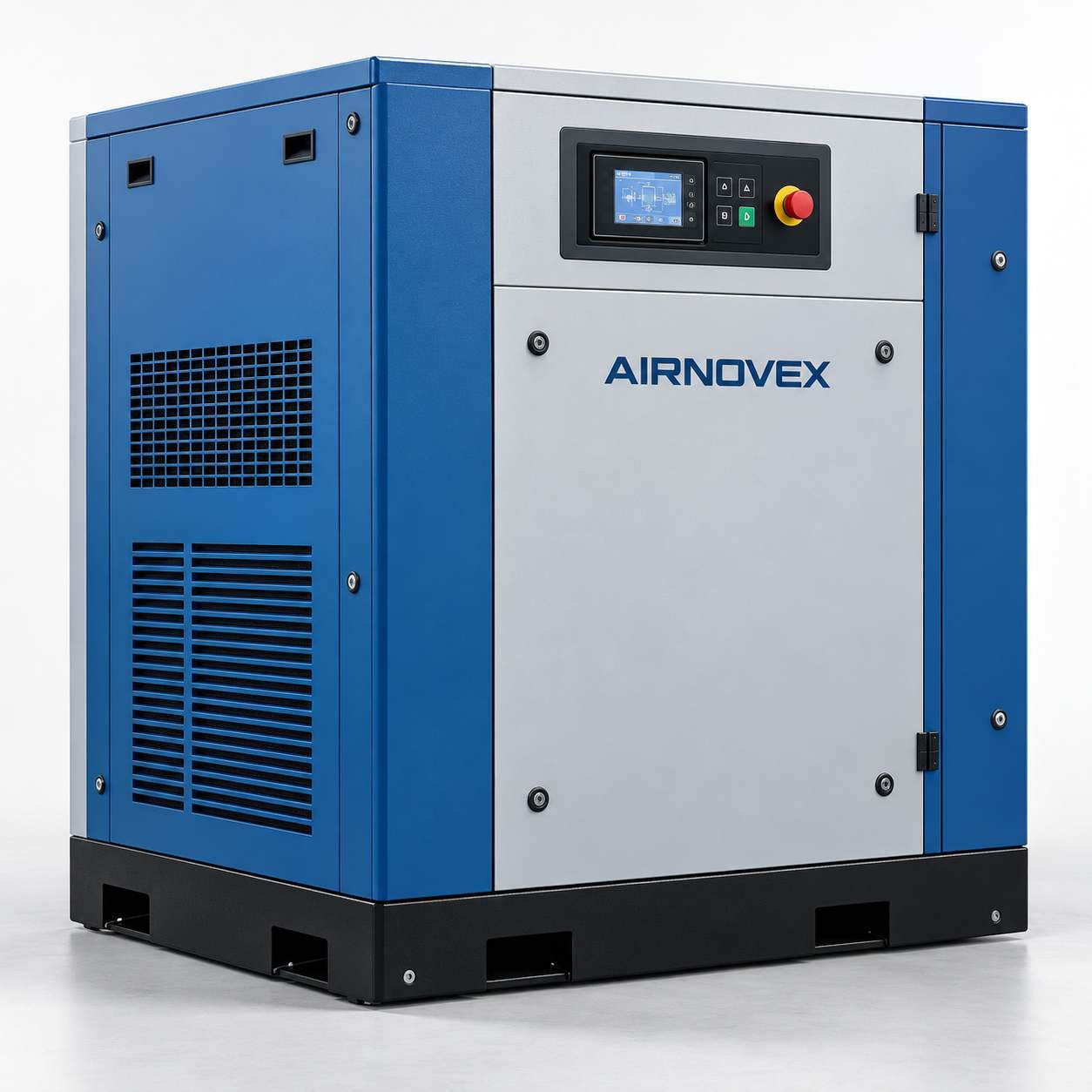
Rotary Screw Air Compressors for Reliable Industrial Air Supply
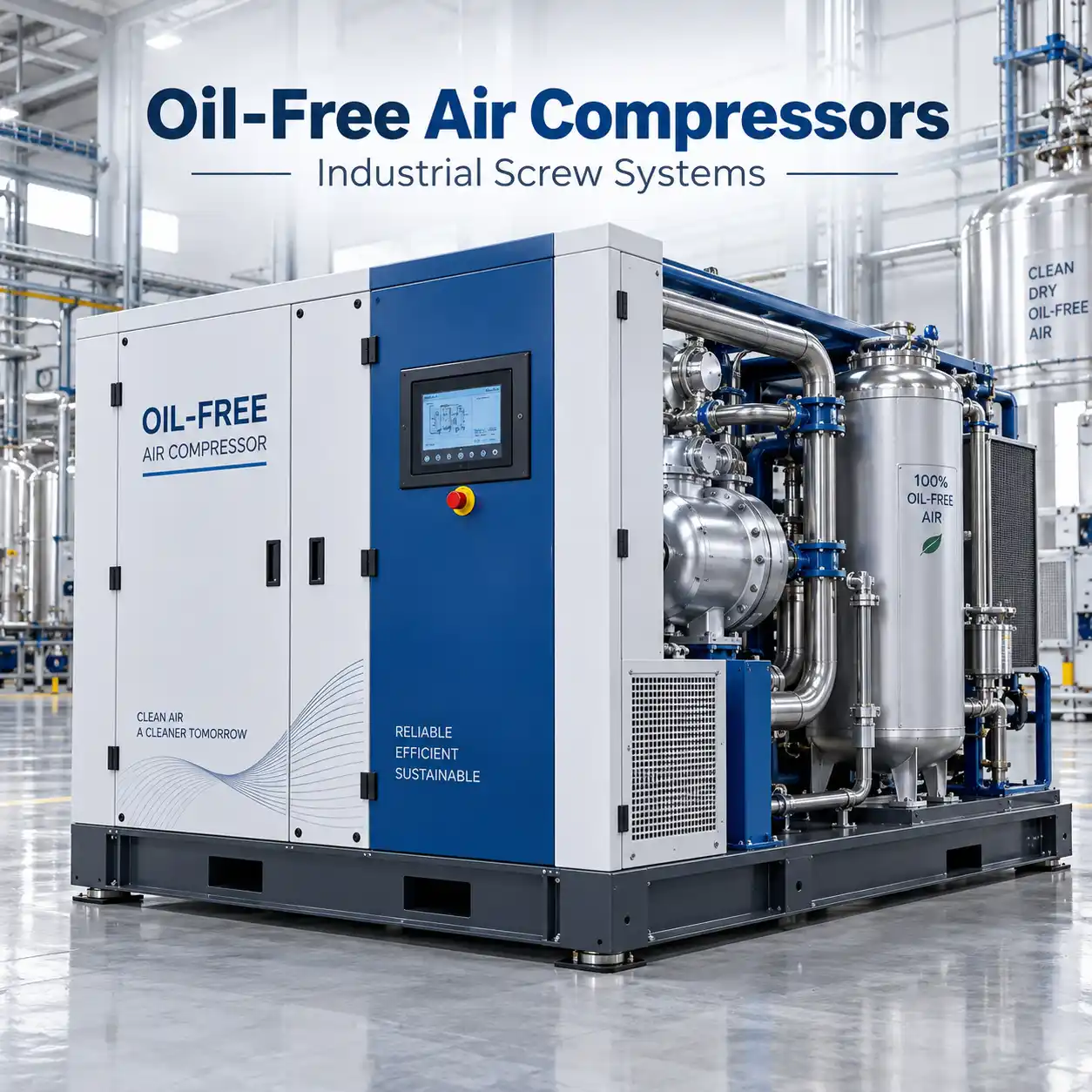
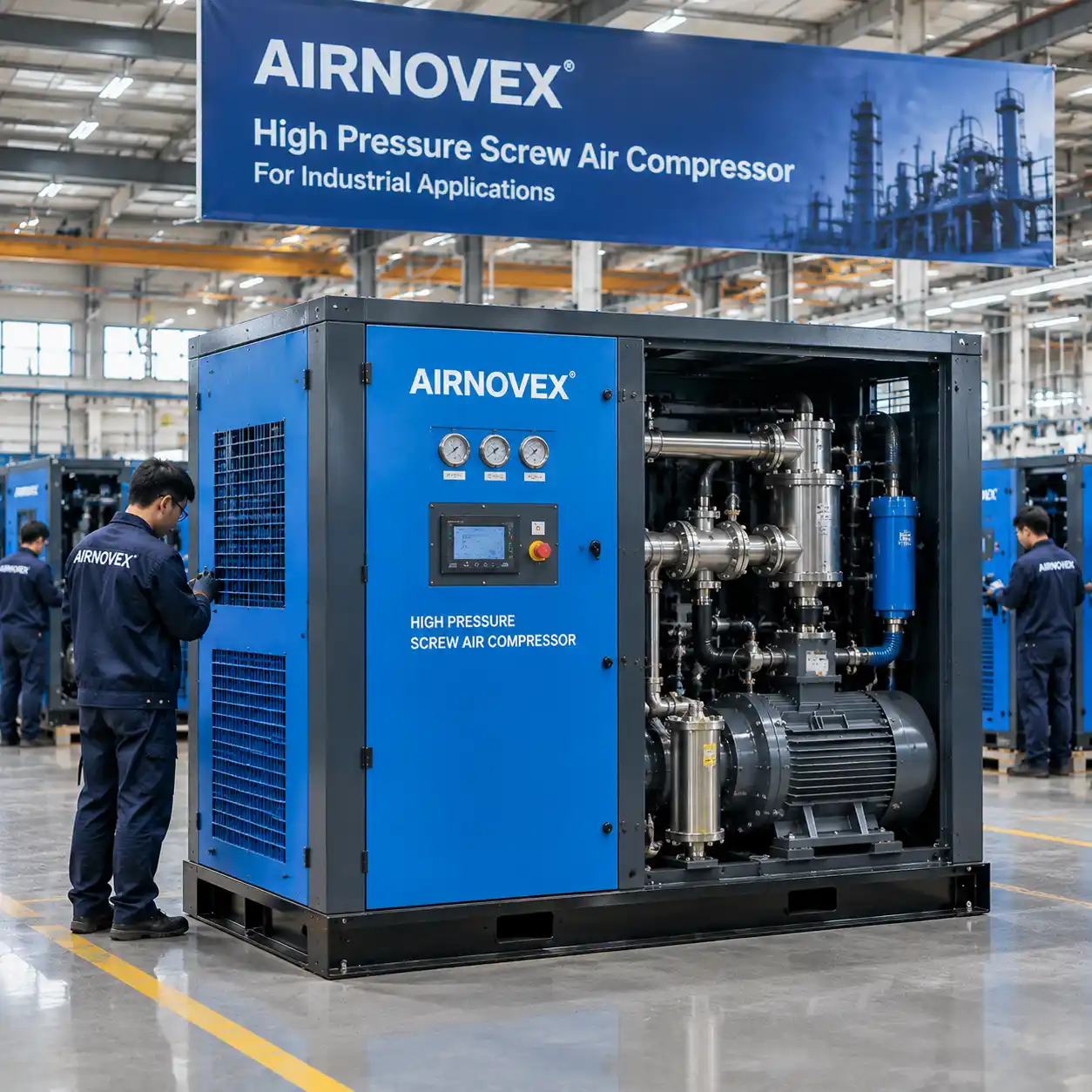
AIRNOVEX rotary screw air compressors are designed for industrial facilities that need a stable, continuous source of compressed air for production equipment, automation, pneumatic tools, machining and process applications. Available configurations include fixed-speed compressors, permanent-magnet variable-speed models and two-stage compression systems for different air-demand profiles and operating requirements.
Selecting an industrial air compressor is not simply a matter of choosing motor horsepower. Required airflow, working pressure, duty cycle, demand fluctuation, air quality, electrical supply, ambient conditions and future production capacity all influence the correct compressor and compressed-air system design.
Choose the Compressor Type That Matches Your Air Demand
No single compressor configuration is ideal for every plant. AIRNOVEX helps industrial buyers compare operating patterns before selecting a screw compressor, rather than treating motor size alone as the deciding factor.
Fixed-Speed Rotary Screw Air Compressors
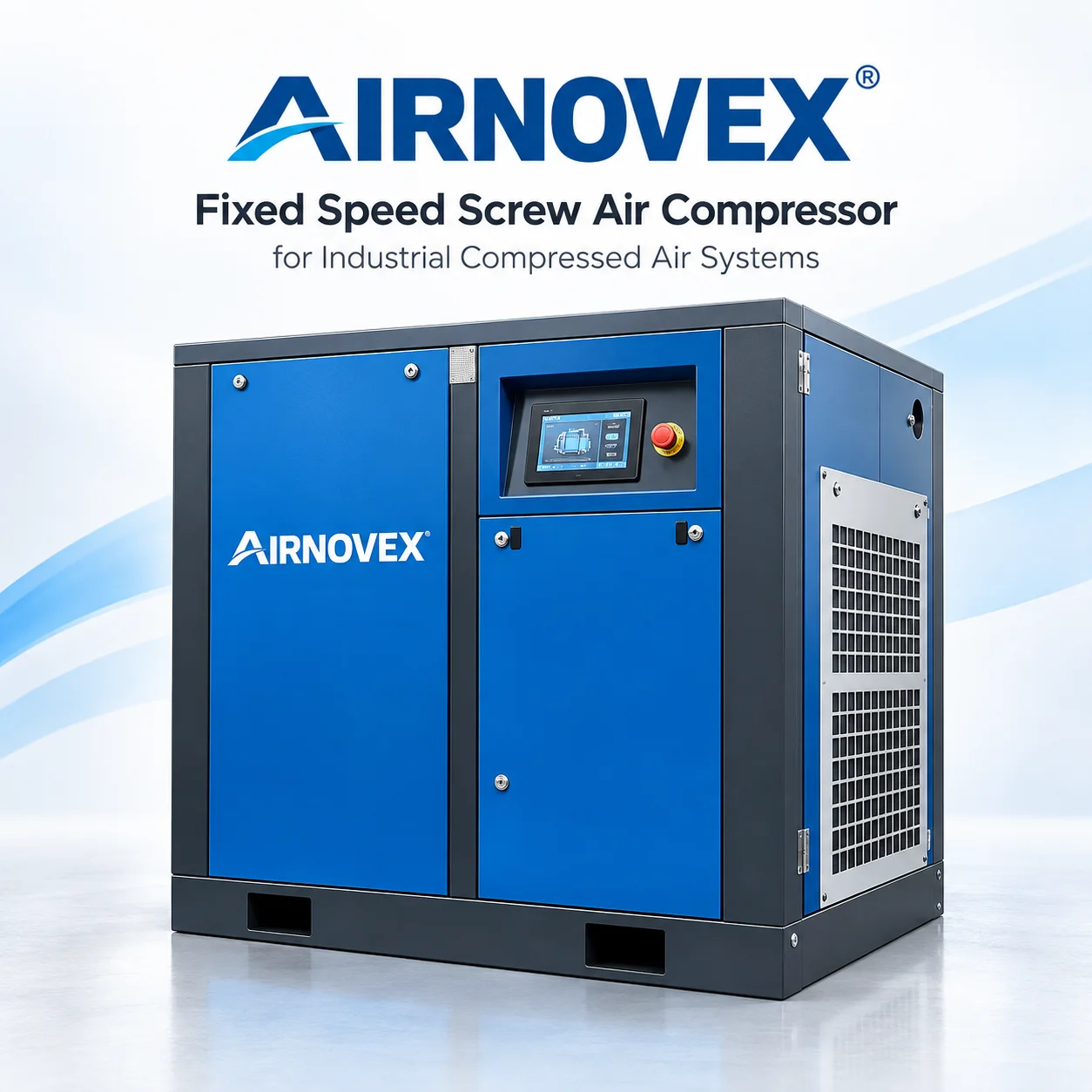
Fixed-speed compressors operate the drive motor at a constant speed and typically manage changing demand through load/unload control. They can be an effective and straightforward choice when plant air consumption remains relatively steady for long operating periods.
Consider fixed speed when:
- Compressed-air demand stays close to full load.
- The process runs on a predictable production schedule.
- Simplicity and straightforward operation are priorities.
- Part-load operation is limited.
Variable-Speed Rotary Screw Air Compressors
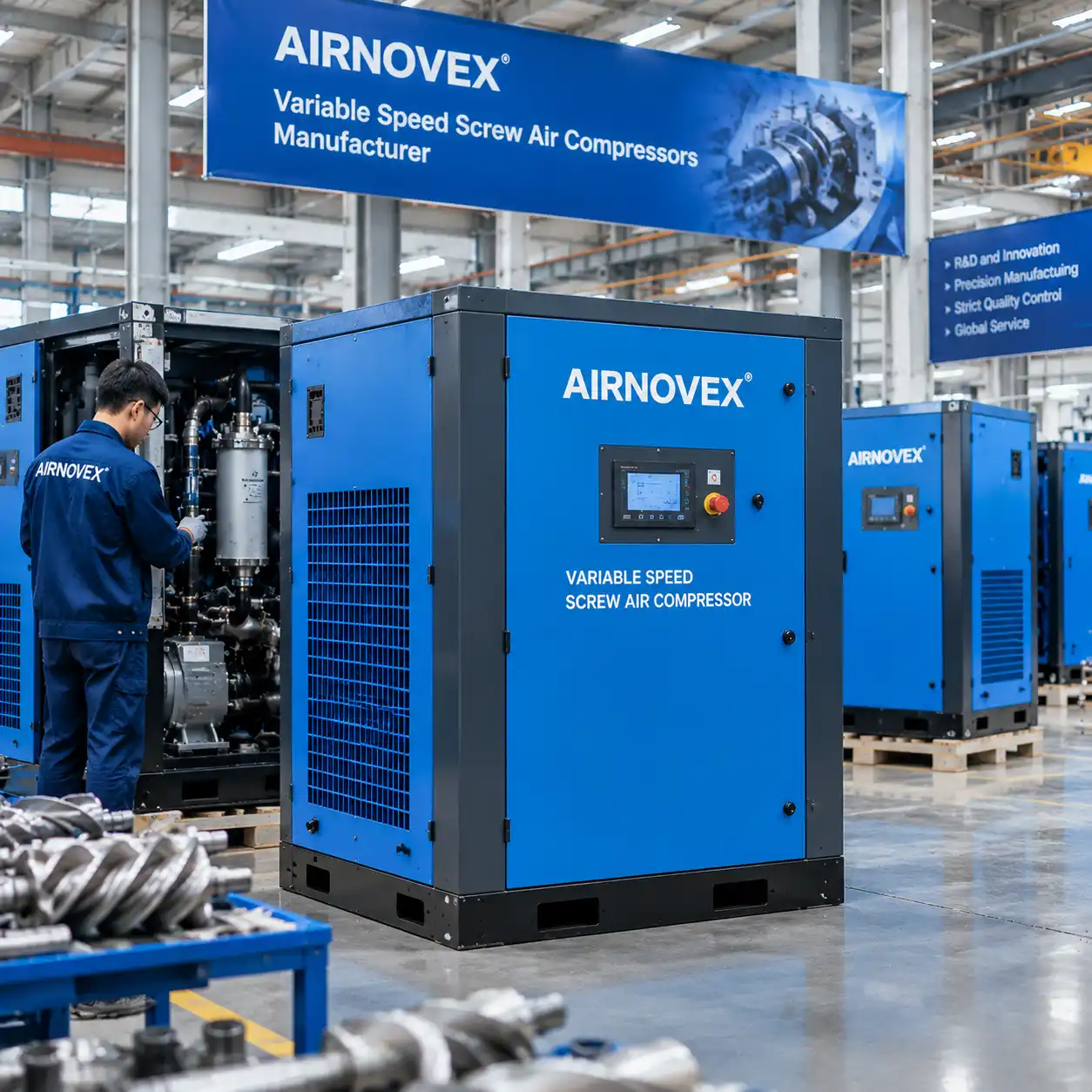
A variable speed air compressor adjusts motor speed to better follow changing compressed-air demand. When a plant spends significant time below peak airflow, matching compressor output to demand can reduce unnecessary unloaded operation and help maintain a narrower pressure band.
Consider VSD when:
- Air consumption changes throughout the shift.
- Multiple production lines start and stop independently.
- Part-load efficiency is important to operating cost.
- Stable system pressure is important to the process.
Two-Stage Screw Air Compressors
Two-stage compression divides the overall compression ratio between two compression stages. This architecture can reduce the work required for compression in suitable operating conditions and is commonly evaluated for larger, heavily utilized compressed-air systems where lifecycle energy consumption matters.
Consider two stage when:
- The compressor operates for extended production hours.
- Compressed-air consumption is substantial.
- Lifecycle energy cost is a key purchasing factor.
- The application fits the available pressure and airflow range.
Built Around Real Compressed-Air Operating Requirements
Industrial compressed-air systems may operate across one, two or three production shifts, and the cost of compressed air continues long after the initial equipment purchase. The compressor therefore needs to be evaluated as part of a complete operating system rather than as an isolated machine.
Motor power, free air delivery, discharge pressure, control strategy, cooling, downstream air treatment and pressure drop all affect system performance. AIRNOVEX can use these operating inputs to narrow the appropriate compressor configuration for a new installation, plant expansion or equipment replacement project.
- Single-stage and two-stage compression configurations.
- Fixed-speed and permanent-magnet variable-speed options.
- Air-cooled industrial configurations across multiple power classes.
- System matching for receivers, dryers, filtration and distribution.
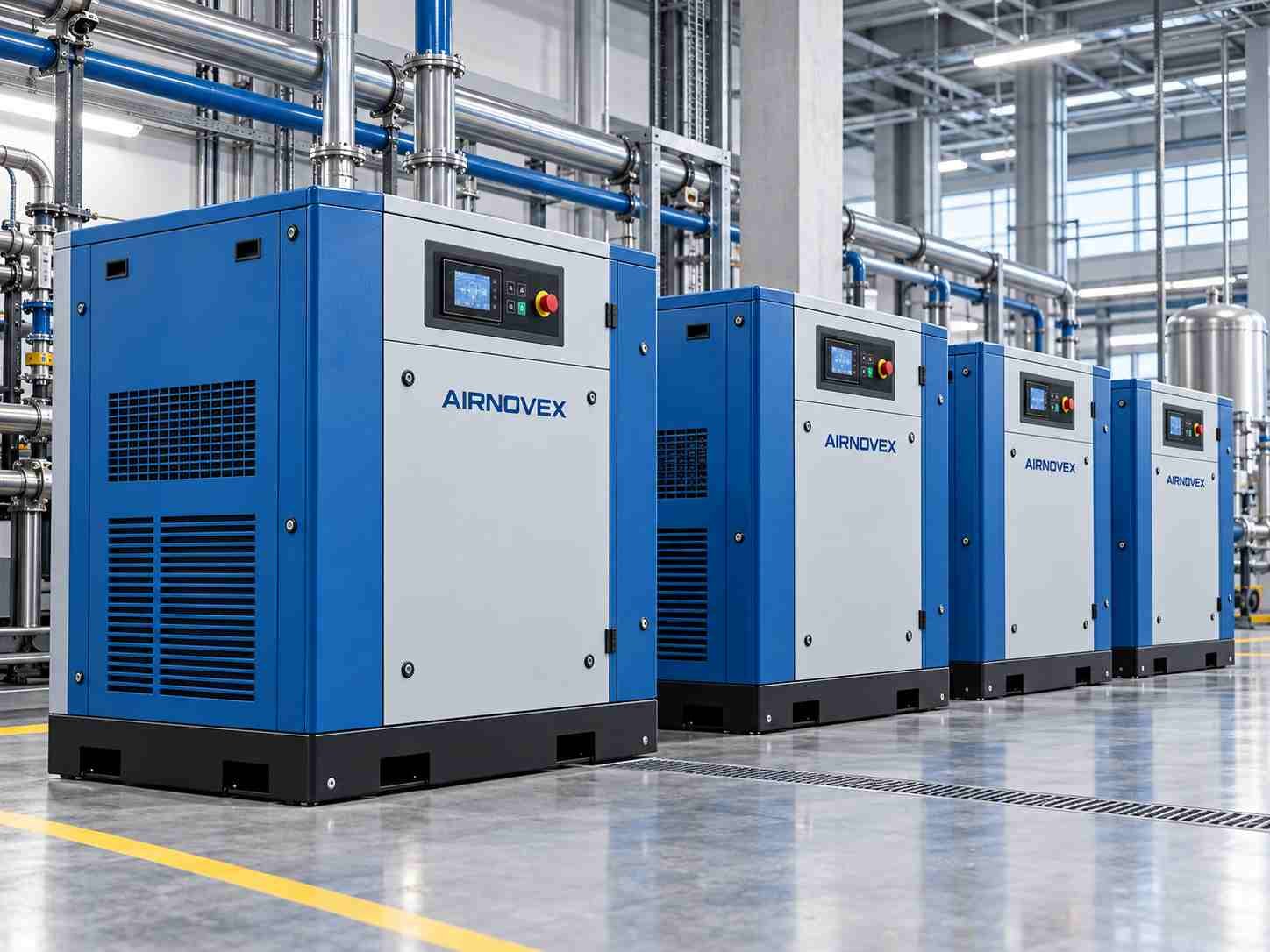
What Industrial Buyers Should Expect From a Screw Compressor
Stable Air Delivery
Rotary screw technology is well suited to continuous industrial air supply where machinery and production processes require dependable airflow over extended operating periods.
Demand-Based Control
Fixed-speed and variable-frequency control strategies allow the compressor configuration to be selected according to the actual load profile instead of a one-size-fits-all approach.
Service Access
Routine access to filters, lubricant-related components, separators, coolers and other service points should be considered during both compressor selection and equipment-room planning.
System Flexibility
Compressors can be integrated with receivers, dryers, filters, drains and system controls to meet pressure stability and compressed-air quality requirements.
Part-Load Efficiency
Where demand varies significantly, VSD operation can be evaluated to reduce inefficient unloaded running and better match air production with plant consumption.
Heat Management
Correct ventilation and cooling are essential because compression generates heat. Equipment layout should support unrestricted cooling airflow and practical cooler maintenance.
Intelligent Monitoring
Controller-based operation can provide visibility into machine operating conditions and helps operators manage loading, alarms and service planning according to the selected configuration.
Lifecycle Focus
The purchase price is only one part of ownership cost. Electricity, pressure losses, maintenance, air leaks and unnecessary pressure all influence long-term compressed-air cost.
Representative Rotary Screw Air Compressor Specifications
The following configurations are representative published specifications from the supplied product reference material. They illustrate how airflow changes with pressure and how fixed-speed, variable-speed and two-stage machines can differ. Final AIRNOVEX specifications should always be confirmed for the exact compressor selected for your project.
| Configuration | Motor Power | 0.8 MPa / ≈116 psi | 1.0 MPa / ≈145 psi | 1.25 MPa / ≈181 psi | Cooling | Outlet | Dimensions (mm) | Weight |
|---|---|---|---|---|---|---|---|---|
| Single-Stage Fixed Speed | 15 kW / ≈20 hp | 2.4 m³/min / ≈84.8 CFM | 2.1 m³/min / ≈74.2 CFM | 1.7 m³/min / ≈60.0 CFM | Air cooled | G 3/4 | 1000 × 700 × 1000 | 290 kg |
| Single-Stage PM VSD | 15 kW / ≈20 hp | 0.8–2.4 m³/min / ≈28–85 CFM | 0.7–2.2 m³/min / ≈25–78 CFM | 0.6–1.8 m³/min / ≈21–64 CFM | Air cooled | G 3/4 | 1000 × 700 × 1000 | 195 kg |
| Two-Stage PM VSD | 37 kW / ≈50 hp | 4.2–7.2 m³/min / ≈148–254 CFM | 2.0–6.0 m³/min / ≈71–212 CFM | 1.7–5.0 m³/min / ≈60–177 CFM | Air cooled | G 1 1/2 | 1580 × 950 × 1430 | 800 kg |
How a Rotary Screw Air Compressor Works
A rotary screw compressor uses two intermeshing helical rotors to reduce the volume of incoming air and raise its pressure. In an oil-injected industrial screw compressor, lubricant is also used in the compression process for sealing, cooling and lubrication before being separated from the compressed air downstream.
Fixed-Speed vs. VSD Rotary Screw Air Compressors
A VSD air compressor is not automatically the right choice for every application. The better choice depends on how the facility consumes compressed air. Plants with stable base demand may operate effectively with fixed-speed equipment, while facilities with significant demand fluctuation may benefit from variable-speed capacity control.
| Selection Factor | Fixed-Speed Compressor | VSD / VFD Compressor |
|---|---|---|
| Demand profile | Best considered when demand remains relatively stable. | Best considered when airflow demand changes materially during operation. |
| Motor operation | Motor runs at a fixed operating speed. | Motor speed is adjusted within the available control range. |
| Part-load behavior | May rely more heavily on load/unload operation. | Can better match compressor output to changing plant demand. |
| Pressure control | Typically operates across a defined load/unload pressure band. | Can support a tighter pressure band when correctly sized and configured. |
| Initial equipment cost | Often simpler from an equipment configuration standpoint. | Includes variable-frequency drive and associated control components. |
| Best evaluation method | Compare expected loaded operating hours and base demand. | Review the site's actual airflow profile and time spent at partial load. |
Single-Stage vs. Two-Stage Screw Compression
Single-Stage Screw Compressor
A single-stage compressor completes the primary compression process in one screw compression stage. It is widely used across industrial compressed-air applications and can provide a practical balance of equipment cost, capacity, service requirements and energy performance.
- Suitable for a broad range of manufacturing applications.
- Available in fixed-speed and variable-speed configurations.
- Straightforward option for many standard plant-air requirements.
- Often appropriate when project scale does not justify a more complex compression system.
Two-Stage Screw Compressor
A two-stage screw air compressor divides compression between two stages. By distributing the compression ratio and controlling temperature between stages according to the machine design, two-stage architecture can offer efficiency advantages in suitable high-utilization applications.
- Often evaluated for larger or heavily utilized compressed-air demand.
- Useful where lifecycle electricity consumption is a major purchasing factor.
- Available with variable-speed control in selected configurations.
- Should be compared against single-stage alternatives using real operating data.
Where Rotary Screw Compressors Are Used
Screw compressors are commonly selected where industrial equipment needs a consistent source of plant air. The exact compressor, dryer and filtration system should be matched to the air quality and pressure requirements of the process.
Energy Efficiency Is a System Question, Not Just a Compressor Label
Electricity can represent a major portion of compressed-air lifecycle cost. Improving efficiency therefore begins with understanding how the entire system operates rather than comparing one specification in isolation.
Size for Real Demand
Oversizing can increase time spent in inefficient operating conditions. Base selection on measured or carefully calculated airflow, peak demand and expected future expansion.
Use the Lowest Practical Pressure
Generating more pressure than the process actually needs consumes additional energy and can increase leakage losses. Account for real pressure drop through piping and air treatment.
Evaluate Demand Variation
When demand changes substantially through a shift, compare VSD operation, compressor sequencing and storage rather than assuming a single oversized machine is the best solution.
Control Air Leaks
Leaks consume compressor capacity without creating productive work. A leak-reduction program can reduce unnecessary compressor loading and help recover available system capacity.
Maintain Air Treatment
Dirty filters and poorly maintained treatment equipment can increase pressure drop. Service the dryer and filtration system as part of the compressor's overall efficiency plan.
Review Lifetime Cost
Compare acquisition cost together with projected electricity use, maintenance, consumables, operating hours, pressure requirements and expected production utilization.
How to Choose the Right Rotary Screw Air Compressor
A useful compressor quotation should begin with operating data. Providing the following information helps AIRNOVEX narrow the required airflow, pressure, control method and supporting equipment.
- Required Airflow Specify expected demand in CFM or m³/min, including normal and peak consumption.
- Required Working Pressure Provide the pressure actually needed at the point of use in psi, bar or MPa.
- Duty Cycle State operating hours per day, shifts per week and whether demand is continuous.
- Demand Variation Explain whether air consumption is stable or changes significantly during production.
- Ambient Conditions Share typical equipment-room temperature, altitude, dust conditions and ventilation constraints.
- Electrical Supply Confirm available voltage, phase and frequency before equipment configuration is finalized.
- Air Quality Define required dryness, filtration and oil-content limits for the actual process.
- Installation Environment Provide available space, access restrictions, piping layout and equipment-room conditions.
- Future Capacity Identify planned production expansion so the system is not designed only for today's load.
- Maintenance Strategy Consider service access, spare parts, planned maintenance windows and redundancy requirements.
The Compressor Is Only One Part of the Air System
Reliable plant air depends on storage, treatment, condensate management, piping and controls as well as the compressor itself. The correct combination depends on process air quality, demand profile and facility layout.
Air Receiver Tank
Provides compressed-air storage, helps buffer short demand fluctuations and can support more stable system operation when correctly sized and installed.
Refrigerated Air Dryer
Commonly used for general industrial applications where compressed-air moisture needs to be reduced to a practical pressure dew point.
Desiccant Dryer
Used when an application requires substantially drier compressed air than a refrigerated dryer can normally provide.
Line Filtration
Removes selected particulate, aerosol and other contaminants according to required downstream air quality.
Automatic Drains
Help remove condensate from receivers, filters and other treatment components without relying only on manual draining.
Oil-Water Separation
Can be included in condensate management for oil-injected compressed-air systems where applicable.
Distribution Piping
Properly sized piping helps control pressure drop and supports reliable air delivery to the point of use.
System Controls
Multi-compressor installations can benefit from coordinated control rather than allowing several compressors to compete independently for the same pressure signal.
Plan the Compressor Room for Long-Term Serviceability
Installation Considerations
- Provide sufficient cooling and ventilation for heat rejection.
- Maintain service clearance around doors, filters, coolers and major components.
- Keep intake air away from excessive heat, dust and harmful contaminants.
- Size compressed-air piping to limit unnecessary pressure loss.
- Plan condensate drainage from receivers, dryers and filters.
- Verify the exact voltage, frequency and electrical requirements before installation.
- Use qualified personnel for electrical connection and commissioning.
Preventive Maintenance Priorities
- Inspect and replace intake filtration according to operating conditions.
- Maintain lubricant according to the compressor's approved service requirements.
- Service air/oil separation components when required on oil-injected machines.
- Keep cooling surfaces clean to maintain effective heat transfer.
- Inspect hoses, connections, drains and piping for leakage.
- Review operating alarms and controller information instead of ignoring recurring faults.
- Follow the maintenance schedule specified for the final compressor model.
A Practical B2B Approach to Industrial Compressor Sourcing
AIRNOVEX focuses on helping industrial buyers match compressor technology to the actual application. Instead of beginning with a single machine specification, the selection process considers airflow, pressure, operating schedule, demand variation, air treatment and installation conditions.
Multiple Compressor Configurations
Discuss fixed-speed, VSD/VFD, permanent-magnet variable-speed, single-stage and two-stage configurations according to the project's operating profile.
Technical Model Selection
Provide the required CFM or m³/min, working pressure, operating hours and application so the appropriate compressor range can be evaluated.
Compressed-Air System Matching
Compressor selection can be coordinated with receiver capacity, dryer type, filtration, condensate management and plant distribution requirements.
International Project Requirements
Buyers can provide destination-market voltage, frequency and installation requirements during the quotation process so applicable configurations can be reviewed.
OEM & Project Inquiries
Distributors and industrial project buyers can discuss available equipment configuration, branding and project-supply options based on current manufacturing capabilities.
Lifecycle Consideration
Equipment selection can be evaluated around both initial requirements and longer-term operating factors such as energy consumption, service access and future demand.
Rotary Screw Air Compressor Questions
What is a rotary screw air compressor?
A rotary screw air compressor is a positive-displacement compressor that uses two intermeshing helical rotors to compress air. It is widely used for industrial plant air because it can provide continuous compressed-air delivery across long operating periods.
How do I size a rotary screw air compressor?
Start with required airflow at the required working pressure. Then consider peak demand, duty cycle, demand variation, pressure losses, air quality, ambient conditions and future expansion. Use CFM or m³/min for airflow rather than selecting only by motor horsepower.
What is the difference between a VSD and fixed-speed air compressor?
A fixed-speed compressor operates the drive motor at a constant speed and commonly manages demand through loading and unloading. A VSD compressor adjusts motor speed within its operating range to better follow changing airflow demand. The right choice depends on the facility's load profile.
Are rotary screw compressors suitable for continuous operation?
Rotary screw compressors are commonly used for industrial applications that require extended or continuous compressed-air production. The machine must still be correctly sized, ventilated and maintained for its operating environment.
How much air pressure does my factory need?
The required pressure should be based on the highest legitimate point-of-use requirement plus reasonable system pressure loss. Avoid setting the entire system substantially higher than necessary simply to compensate for poorly sized piping or excessive pressure drop.
What is a two-stage rotary screw air compressor?
A two-stage screw compressor divides compression between two compression stages rather than completing the full pressure ratio in a single stage. It is commonly evaluated for high-utilization industrial installations where energy performance can justify the additional compression architecture.
Does a VSD compressor always save more energy?
No. VSD technology can be advantageous when demand varies significantly, but a compressor operating close to full load for most of its running hours has a different operating profile. Compare actual or estimated demand data before choosing between fixed-speed and variable-speed equipment.
How often does a screw air compressor need maintenance?
Maintenance frequency depends on the specific compressor, operating hours, ambient temperature, dust levels, load profile and service component. Follow the current model-specific maintenance schedule rather than using one universal interval for every compressor.
What auxiliary equipment does a rotary screw compressor need?
A typical industrial installation may use an air receiver, refrigerated or desiccant dryer, line filters, automatic drains, condensate treatment and correctly sized distribution piping. The exact combination depends on air quality and process requirements.
How can I reduce compressed-air energy costs?
Start by matching compressor capacity to actual demand, reducing unnecessary system pressure, repairing leaks, limiting pressure drop, maintaining filters and dryers and choosing an appropriate control strategy. Facilities with fluctuating demand should also evaluate VSD operation and compressor sequencing.
Can AIRNOVEX supply compressors for different voltages and frequencies?
Electrical configuration should be confirmed for the specific model and destination market during quotation. Provide the required voltage, phase and frequency so AIRNOVEX can review the applicable configuration before the order is finalized.
What information should I provide when requesting a compressor quote?
Provide required airflow, working pressure, voltage and frequency, application, daily operating hours, demand variation, installation conditions and required compressed-air quality. This information makes model selection more accurate and reduces unnecessary oversizing.
Request a Rotary Screw Air Compressor Quote
Tell AIRNOVEX how your plant uses compressed air. We can use your operating requirements to evaluate fixed-speed, VSD and two-stage configurations and identify the information needed for a project quotation.
Request a Rotary Screw Air Compressor QuoteInclude these details:
- Required airflow: CFM or m³/min
- Required pressure: psi, bar or MPa
- Voltage, phase and frequency
- Industrial application
- Operating hours per day
- Stable or variable air demand
- Installation environment
- Required air quality